
Broad reach
Membrane instability is a critical feature across multiple pathologies, including muscular dystrophy, myocardial infarction, and trauma related injuries.
 elymusConnect
Elymus is engineering bottlebrush macromolecules designed to stabilize damaged muscle cell membranes, starting with Duchenne muscular dystrophy (DMD).
Engineering Biology Approach
In Duchenne muscular dystrophy, loss of dystrophin leaves the sarcolemma vulnerable to mechanical stress and disruption. Elymus is developing a powerful new class of macromolecules, Elymers™, designed to engage and stabilize the muscle membrane.
How the platform worksMechanism overview
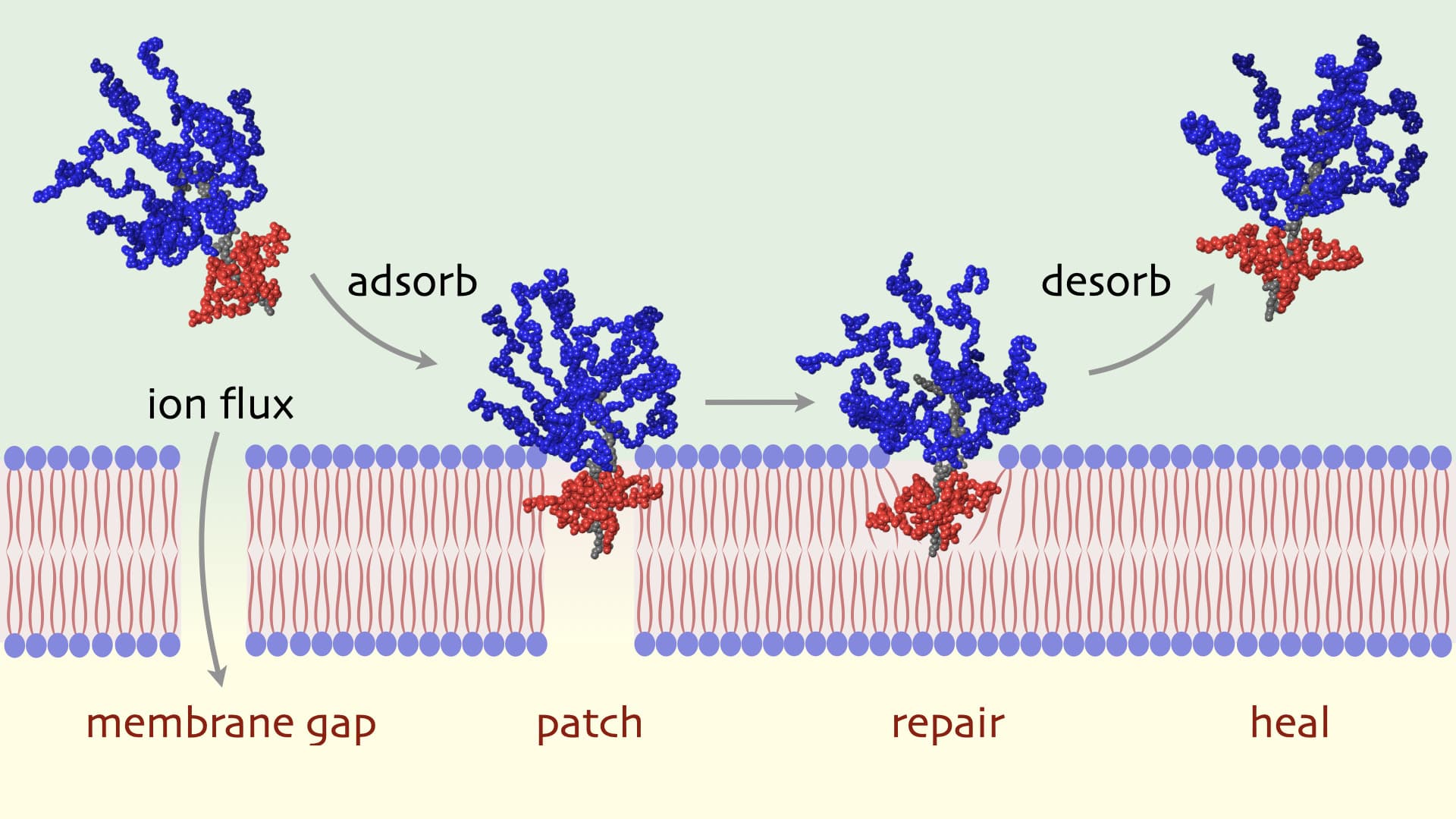
Hypothesis on action of the macromolecule on the lipid bilayer: patch, repair and heal.
Membrane instability is a critical feature across multiple pathologies, including muscular dystrophy, myocardial infarction, and trauma related injuries.
Bottlebrush designs have demonstrated differentiated membrane engagement, cellular protection, and physiological outcomes in preclinical studies.
Discovery and engineering are grounded in molecular characterization and peer-reviewed work from leaders in macromolecular science and muscle biology.
Lead program
A devastating genetic disease defined by progressive muscle degeneration and membrane fragility.
Listen
Base by Base · Episode 173